EMC Grommets: The Ultimate Guide
EMC grommets provide superior shielding and protection for cables and wires. Learn about their benefits and applications in this ultimate guide.


Conduit selection can make or break the safety and performance of your electrical systems. While liquid-tight and seal-tight conduits may sound interchangeable, their distinct properties and ideal use cases are often misunderstood, leading to costly installation errors.
This comprehensive guide will clear up the confusion surrounding liquid-tight and seal-tight conduits. By diving into their unique characteristics, NEC codes, and practical applications, you’ll gain the knowledge to choose the right conduit for your next project with confidence.
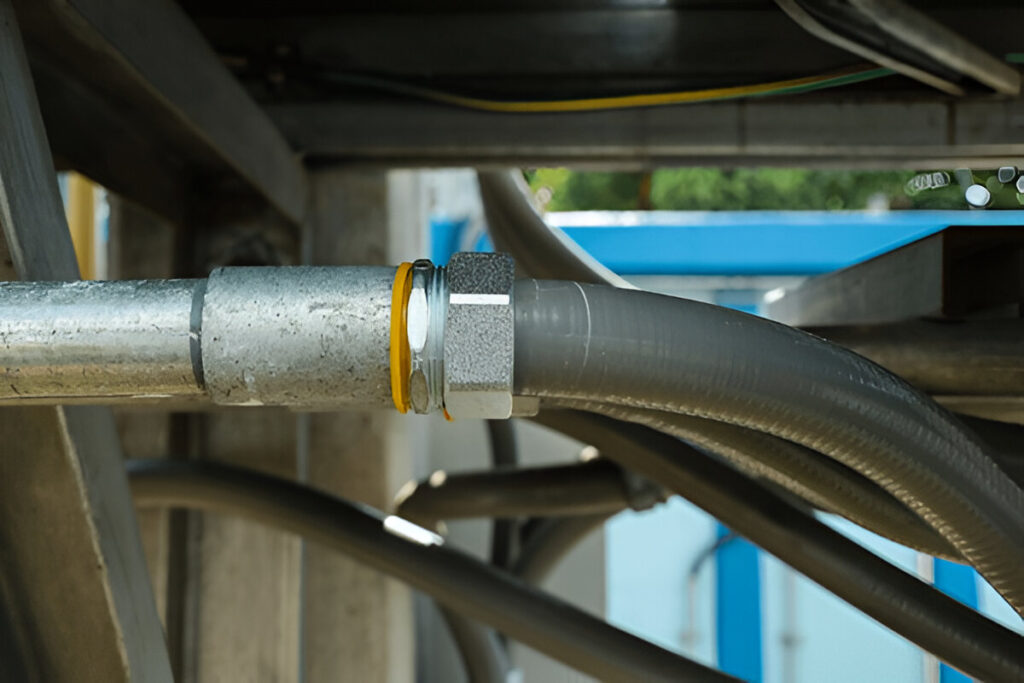
Liquid-tight conduit is a type of flexible electrical conduit designed to protect wiring in wet or damp environments. It provides a waterproof seal to prevent liquids and moisture from penetrating the conduit and damaging the enclosed conductors.
Liquid-tight conduit is constructed with a plastic or metallic core covered by a waterproof plastic or rubber jacket. This dual-layer design offers flexibility for easy routing while still providing robust protection against the elements.
LFMC consists of a spiral-wound metallic core covered by a PVC jacket. The metallic core, typically made of galvanized steel or aluminum, provides mechanical protection and grounding continuity. The outer PVC jacket is liquid-tight, UV resistant, and flame retardant.
LFMC offers good flexibility and strength, making it suitable for industrial applications where wiring needs protection from dust, dirt, oil, chemicals, and physical damage in addition to liquids.
LFNC, as the name suggests, replaces the metallic core with a nonmetallic one, usually made of PVC. The core is then covered with an outer PVC, TPE, or neoprene jacket that is liquid-tight and provides additional protection.
LFNC-B (Type B) contains an integral bonding strip for grounding. LFNC is lightweight, highly flexible, and resistant to corrosion, making it ideal for wet and corrosive environments. However, it lacks the mechanical strength and grounding continuity of LFMC.
“Seal-tight” is a colloquial term often used interchangeably with “liquid-tight” to refer to conduits that provide a liquid-tight seal. However, “seal-tight” is not an official NEC designation and can lead to confusion. Technically, all liquid-tight conduits (LFMC and LFNC) are “seal-tight” by design as they prevent liquid ingress, but not all seal-tight conduits are necessarily liquid-tight rated.
For example, flexible metal conduit (FMC) is sometimes referred to as “seal-tight” in the industry, even though it lacks the liquid-tight PVC jacket. FMC provides flexibility and mechanical protection but is not rated for wet locations unless specifically indicated.
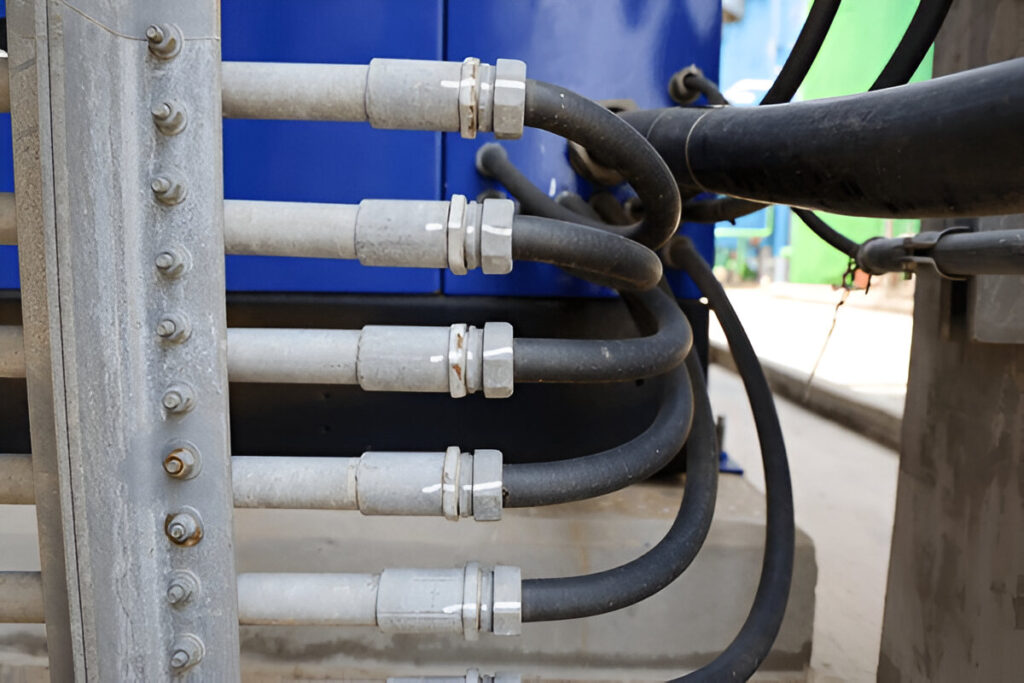
The primary function of liquid-tight conduit, as defined by NEC code, is to prevent liquid ingress and protect enclosed conductors in wet or damp environments.
In contrast, “seal-tight” is a colloquial term that doesn’t necessarily guarantee liquid-tight performance. Seal-tight conduits may resist some liquid penetration but aren’t rated for full liquid-tight protection unless specifically designated as LFMC or LFNC.
Liquid-tight conduits come in two main types: metallic (LFMC) and nonmetallic (LFNC). LFMC has a flexible metal core covered by a liquid-tight PVC jacket, while LFNC replaces the metal core with PVC.
In comparison, seal-tight conduits like flexible metal conduit (FMC) consist of a spiral metal strip with no outer jacket. Some seal-tight conduits may have an outer covering, but it isn’t necessarily liquid-tight rated.
Liquid-tight conduits (LFMC and LFNC) are specifically designed for wet or damp locations where wiring needs protection against liquids, such as in industrial plants, commercial kitchens, car washes, and outdoor installations.
Seal-tight conduits without liquid-tight rating, like FMC, are more commonly used in dry locations that require flexibility and mechanical protection but not necessarily waterproofing.
Both liquid-tight and seal-tight conduits offer flexibility for easy routing around obstacles. However, LFNC is generally more flexible than LFMC due to its nonmetallic core.
Among seal-tight options, FMC provides good flexibility but may be stiffer than nonmetallic alternatives or LFNC.
Liquid-tight conduits (LFMC and LFNC) provide the highest level of protection against liquids, moisture, dust, dirt, and chemicals. They are rated for use in wet locations and offer a waterproof seal.
Seal-tight conduits without liquid-tight designation, such as standard FMC, may resist some moisture but aren’t suitable for direct liquid exposure or wet environments.
In general, liquid-tight conduits tend to be more expensive than seal-tight options due to their added waterproofing and protective features. LFMC is typically pricier than LFNC because of its metallic core.
Seal-tight conduits like FMC are often more economical, but the cost savings may be offset by the need for additional waterproofing measures in damp applications.
Navigating the various terms related to liquid tight and flexible conduit can be challenging, as there are several different types and some confusing nomenclature used in the industry. Here is a breakdown of the key terms to know:
One major point of confusion in the industry is the use of the term “sealtite” or “seal tight.” Sealtite is actually a specific brand name of LFMC produced by Southwire, but the term is often used generically to refer to any LFMC product. This can lead to incorrect terminology and confusion.
To further complicate matters, some brands use terms like “Ultratite” or “Liquatite” for LFMC products. However, there is no distinct “seal tight” conduit category in the NEC. Seal tight is an informal industry term usually used interchangeably with LFMC.
EMC grommets provide superior shielding and protection for cables and wires. Learn about their benefits and applications in this ultimate guide.
Butt connectors are essential electrical components for joining wires.
Learn the key differences between cable glands and grommets, including their functions, materials, and applications.