What Is the Difference Between Cable Gland and Cable Termination
Published: Author: yaonan
Are you confused about the difference between cable glands and cable terminations? Not understanding the distinctions can lead to costly mistakes in your electrical installations.
In this blog post, we’ll clarify the key differences between cable glands and terminations, including their purposes, functions, construction, and typical applications.
What Is a Cable Gland
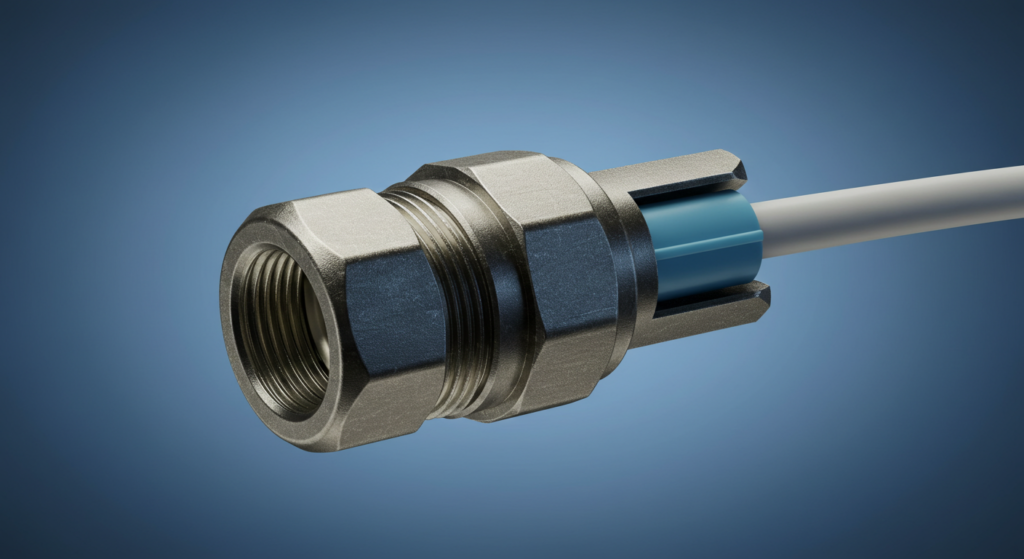
A cable gland, also known as a cable connector, is a mechanical device used to secure and seal the end of an electrical cable to an enclosure or device. It provides strain relief and environmental protection where the cable enters a piece of equipment.
What Is Cable Termination
Cable termination refers to the process of connecting the conductors at the end of a cable to a device such as a connector, terminal block, or network interface. The goal is to establish a secure electrical and mechanical connection.
The Difference Between Cable Gland and Cable Termination
Purpose
Cable glands are used to secure and seal a cable entry point.
Cable termination is used to connect cable conductors to make an electrical connection.
Function
Cable glands provide strain relief and environmental sealing around the cable jacket.
Cable termination establishes the electrical circuit by connecting the cable conductors to a device.
Construction
Cable glands have a mechanical clamping design with compression seals.
Cable termination uses solder, crimp, IDC, or screw terminals to join conductors.
Applications
Cable glands are used in industrial, hazardous area, and exterior environments to protect against dust, moisture, etc.
Cable termination is used universally to complete circuits, whether in a junction box or electronic device.
When to Use a Cable Gland
For sealing and strain relief where a cable passes through an enclosure
To maintain ingress protection of an electrical cabinet or box
With armored or unarmored cable in industrial environments
To meet hazardous area or explosion-proof requirements
For any outdoor cabling or conduit system
When to Use Cable Termination
To complete any electrical circuit or signal path
When connecting cables to equipment ports, PCBs, or terminal blocks
Splicing or extending cable lengths
Anytime conductors need to be securely attached for power or data transmission
Cord Grips Cord grips, also known as gland cable fittings or cable glands, are mechanical devices designed to attach and secure the end of an electrical cable to equipment. These robust components provide a secure entry point for cables entering enclosures, panels, or junction boxes while offering comprehensive protection against environmental factors and mechanical stress. […]
What is a Cord Grip A cord grip is a mechanical device designed to secure, strain-relieve, and seal cables or wires as they enter electrical enclosures, equipment, or junction boxes. These essential components provide protection at cable entry points while maintaining the integrity of electrical connections. Often referred to as cable glands in some regions, […]
What is Cable Gland Thread A Cable Gland Thread is the engineered spiral ridge system machined onto cable glands that creates the critical connection point between cables and electrical enclosures. According to the International Cable Protection Committee, improper thread selection accounts for 32% of all cable entry failures in industrial settings. These precision-engineered threads serve […]